Late summer and fall can be an excellent time to visit Sequoia National Park. The giant sequoia groves remain impressive in every season, mornings become cooler as autumn approaches, and the busiest summer travel period begins to ease after Labor Day. However, a successful 2026 visit requires more planning than simply driving to the General Sherman Tree. Seasonal shuttle service ends in early September, trail and road construction may affect routes, campgrounds fill through advance reservations, and mountain weather can change quickly.
This guide explains what visitors should know before traveling between August and late fall 2026. It focuses on Giant Forest, Lodgepole, Three Rivers, and the main Highway 198 entrance, while also noting conditions that may affect Mineral King and connections toward Kings Canyon. Before leaving, compare your plans with the official National Park Service current conditions page, because closures, smoke, weather, and fire restrictions can change without much warning.
For more local planning help, see our Sequoia and Sierra guide, getting around Tulare County guide, and where to stay near Sequoia National Park.
What to Know Before You Go in Late Summer and Fall 2026
Shuttles, Parking and Construction Will Shape Your Day
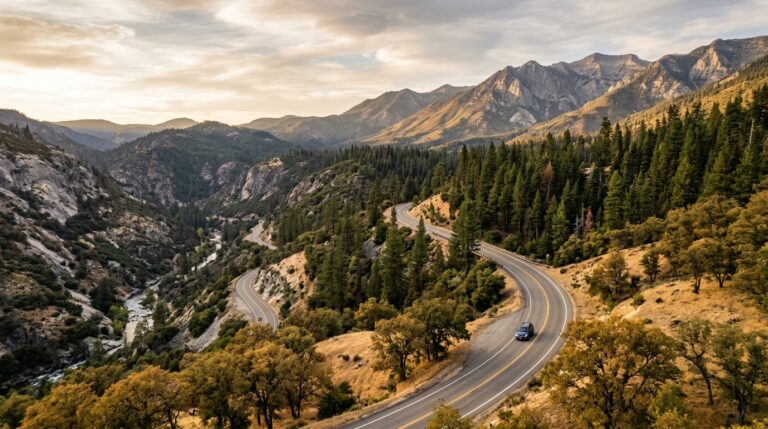
The road from the Ash Mountain entrance near Three Rivers climbs steeply through the foothills before reaching Giant Forest. It is narrow and winding in several sections, and the National Park Service advises longer vehicles to review length restrictions before using the Highway 198 approach.
Plan to begin early. Parking near the Giant Forest Museum and the General Sherman Tree commonly fills by mid-morning during busy periods. An early start improves your chance of finding parking, enjoying cooler temperatures, and walking popular trails before the heaviest crowds arrive. Keep your fuel tank well above empty, carry water and food, and download maps because mobile service is unreliable in many areas.
Free Summer Shuttles End September 7
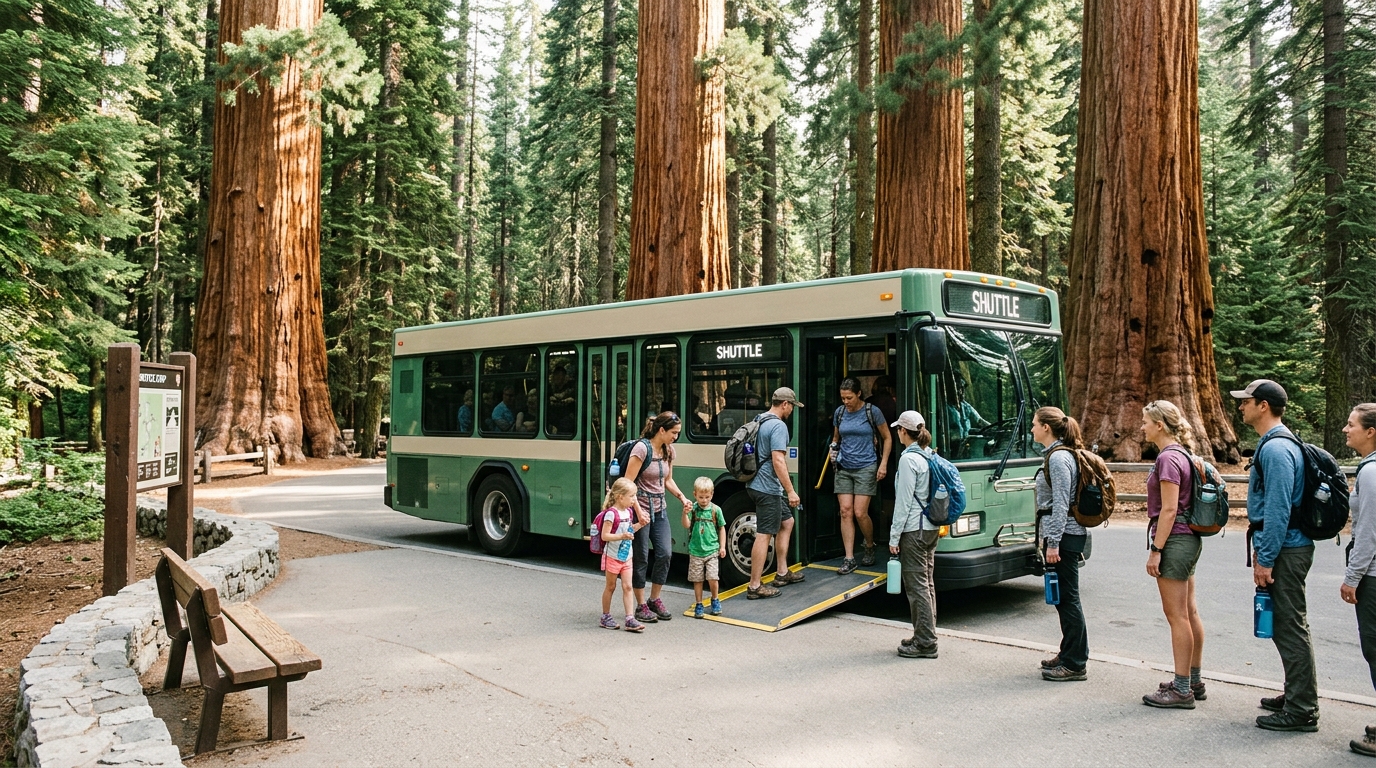
The free 2026 park shuttle operates in the Giant Forest and Lodgepole areas from May 22 through September 7. Routes connect major stops such as the Giant Forest Museum, General Sherman Tree, Lodgepole, Moro Rock, Crescent Meadow, Wolverton, and Wuksachi. The shuttle is especially useful when parking near popular attractions is full or when access roads are closed to general traffic during busy periods.
After September 7, visitors should not assume the same transportation system will be available. Build a driving plan that accounts for parking at each stop, and avoid scheduling too many attractions in one day. There are no regular park shuttles in Kings Canyon National Park, so a combined trip requires additional driving. Travelers staying in Visalia should also distinguish between the free in-park shuttle and the separate paid seasonal service connecting Visalia with Sequoia.
In fall, choose fewer stops and allow time to circle back if a parking lot is full. Never stop in a traffic lane or park on vegetation to save a few minutes.
Congress Trail and Mineral King Work May Affect Plans
A section of the Congress Trail is undergoing reconstruction through the end of September 2026. Visitors can still experience the grove, but the usual short loop is affected, and the route may function more like an out-and-back walk. Follow posted signs rather than relying entirely on an older map.
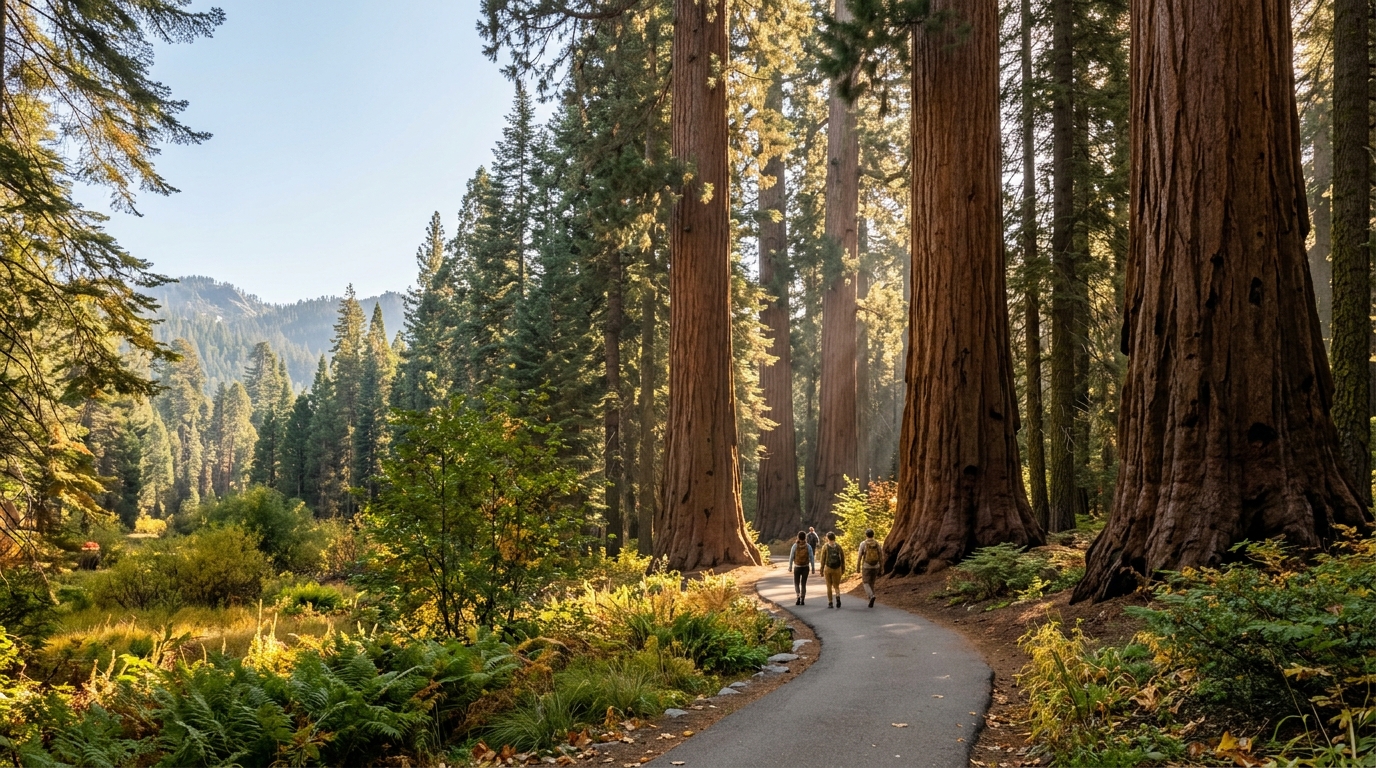
The Congress Trail begins near the General Sherman Tree and leads through one of the park’s finest concentrations of mature sequoias. Even with construction, it can be a worthwhile alternative to taking one photograph at the Sherman Tree and immediately leaving. Remain on established surfaces and allow faster hikers to pass without stepping into protected vegetation.
Mineral King Road is also scheduled for construction in late summer 2026. Traffic delays and temporary weekday closures may be announced as work progresses. Mineral King is a separate, remote destination rather than a quick detour from Giant Forest. Anyone planning to hike or camp there should check the latest park road-construction information shortly before departure.
Reservations, Fire Rules and Mountain Safety Matter
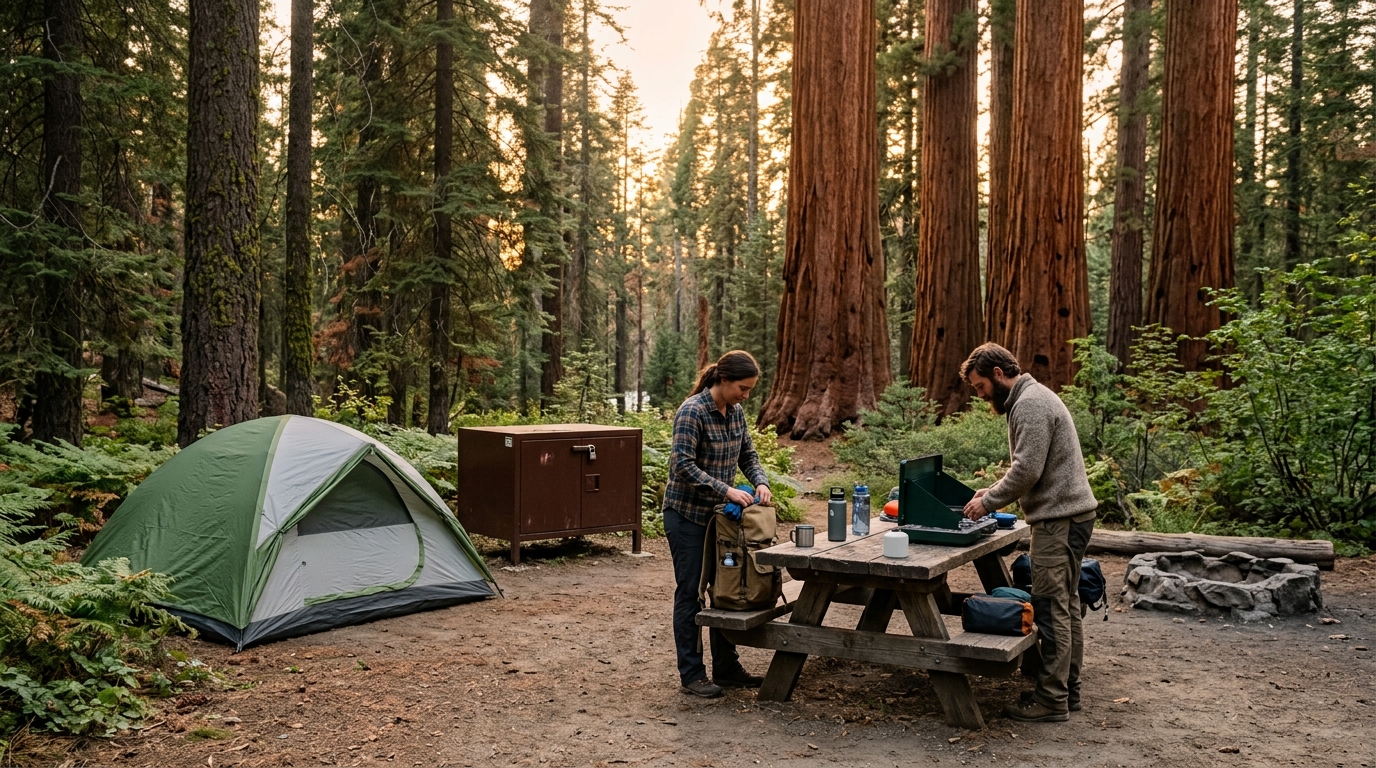
No timed-entry reservation is required simply to enter Sequoia and Kings Canyon National Parks, but that does not mean every part of a trip is available without booking. Campgrounds, wilderness permits, lodging, and some seasonal activities have separate reservation systems. Visitors without confirmed accommodation should not expect to sleep in a trailhead parking lot or improvise a campsite inside the park.
Late summer also remains a serious fire season. Restrictions can change as vegetation dries and weather patterns shift. A cool evening does not mean charcoal, wood fires, or smoking are automatically permitted. Review current restrictions before packing cooking equipment.
Book Campgrounds and Wilderness Permits in Advance
Most park campgrounds require advance reservations and can fill quickly. The official Sequoia and Kings Canyon campground guide should be your source for opening periods, reservation windows, amenities, and closures. South Fork Campground remains closed until further notice because of major storm damage, and dispersed camping is not permitted inside the national parks except for authorized wilderness travel with the required permit.
For overnight backpacking, the 2026 wilderness quota season runs from May 22 through September 26. Reservations are released through Recreation.gov, and permit holders must pick up and validate the actual wilderness permit. An email confirmation alone is not permission to begin an overnight trip. Bear-resistant food storage is required across much of the backcountry, so arrange a suitable canister before reaching the trailhead.
Day hikers do not need a wilderness permit for ordinary front-country walks, but they still need realistic turnaround times. Mountain darkness arrives earlier in fall, temperatures drop quickly after sunset, and trails that feel easy on the way out can become tiring on the return.
Check Fire Restrictions, Weather and Wildlife Rules
The parks use staged fire restrictions that may prohibit wood and charcoal fires at certain elevations or across all campgrounds. Gas, propane, alcohol, and approved tablet or cube stoves may remain permitted under some restriction levels, but visitors must verify the current rule. Restrictions in neighboring Sequoia National Forest may differ from rules inside the national parks.
Weather varies dramatically by elevation. Three Rivers and the foothills may remain hot while Giant Forest is cool, and higher elevations can experience cold rain or early snow. Carry layers, sun protection, water, and a basic emergency kit. If snow or ice develops, tire-chain requirements can change rapidly. Check road information on the day of travel.
Store food, scented toiletries, coolers, and trash correctly. Bears and smaller animals can damage vehicles or become dangerous when people leave attractants accessible. Do not feed wildlife, approach animals for photographs, or leave food unattended. Pets are not allowed on park trails, so travelers with dogs need a separate care plan.
How to Plan a Better Sequoia Visit After Labor Day
Use a Flexible One- or Two-Day Itinerary
A one-day trip should focus on one part of the park. Enter through Three Rivers early, stop at the Foothills Visitor Center when open, continue to Giant Forest, and choose two or three realistic highlights. A strong first visit might combine the General Sherman Tree, Big Trees Trail, Giant Forest Museum, and one scenic viewpoint. Moro Rock should only be attempted when stairs are dry and conditions are safe.
After the summer shuttle season ends, avoid zigzagging repeatedly between Giant Forest, Lodgepole, and distant destinations. Choose a logical driving sequence and accept that a full parking lot may require changing the order. Pack lunch or confirm operating hours for concessions, since services can become more limited later in the season.
With two days, use the first for Giant Forest and Lodgepole, then spend the second exploring the gateway area or another part of Tulare County. Three Rivers offers lodging, food, river scenery, and a relaxed base. Visalia provides a wider range of accommodations and restaurants but requires a longer drive to the entrance.
Travelers
Travelers visiting during September can also pair the park with the Tulare County fall events 2026 guide. Keep event days and mountain days separate when possible so traffic, parking, or an evening program does not force you to rush down a winding road after dark.
By October and November, the main advantage is often a quieter atmosphere rather than guaranteed perfect weather. Seasonal roads, campgrounds, and services begin closing, and Highway 180 toward Cedar Grove generally closes around mid-November depending on conditions. Check each destination independently instead of assuming an open park entrance means every road and facility is operating.
The best fall plan is deliberately flexible. Confirm conditions the evening before, check again in the morning, keep one backup activity in Three Rivers or Visalia, and turn around when weather, smoke, fatigue, or road conditions make the original plan unsafe. A shorter walk among giant trees is better than an overloaded itinerary with no margin for the realities of the Sierra.