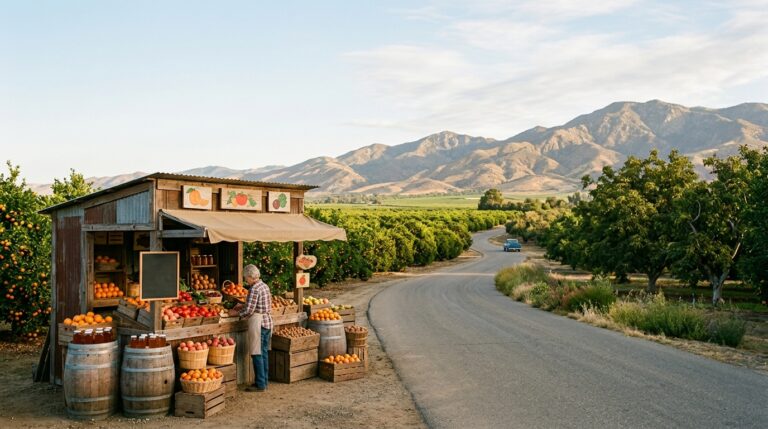
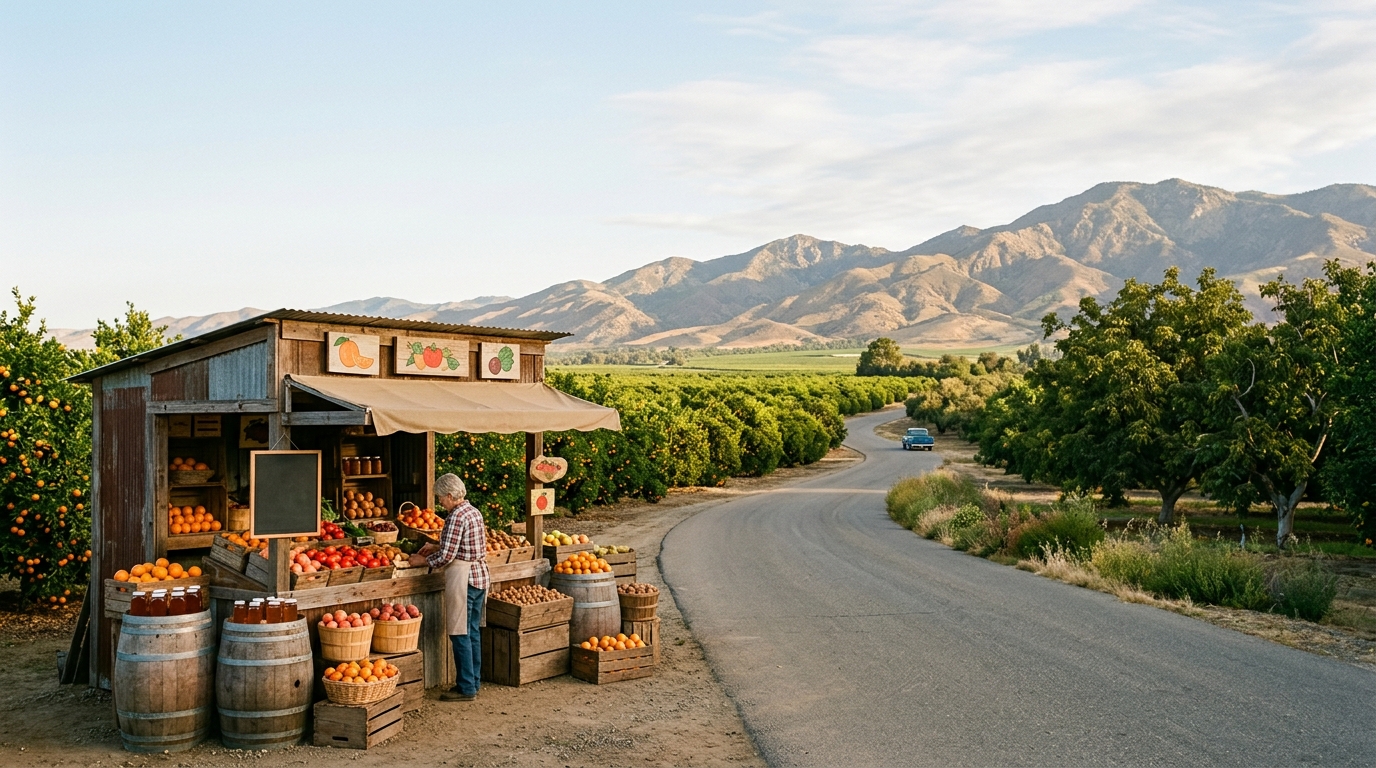
Tulare County is one of the best places in California to understand how food moves from fields and orchards to markets, kitchens, and family tables. A drive through the county can pass citrus groves, dairies, walnut orchards, pomegranate rows, stone-fruit trees, roadside produce stands, and communities whose economies remain closely connected to agriculture. It is a working landscape, so visitors should travel slowly, respect private property, and spend money with growers, market vendors, restaurants, and small businesses that welcome the public.
This farm-to-fork road trip begins in Visalia, follows orchard roads toward Woodlake and the Sequoia gateway, then offers an optional southern extension through Tulare, Exeter, and Porterville. It can be completed in one long day, but a two-day version gives you more time to shop, eat, photograph the landscape safely, and explore without rushing. Seasonal availability changes throughout the year, so ask vendors what was harvested recently instead of arriving with a fixed shopping list.
Before setting out, review our Food, Farms and Markets Guide, Getting Around Tulare County, and Best Time to Visit Tulare County. Travelers combining the route with a mountain stay can also use our Three Rivers Weekend Guide.
Start in Visalia and Follow the Orchard Roads East
Shop the Farmers Markets Before Building Your Route
A farmers market is the strongest starting point because it lets the season determine the rest of the day. Instead of guessing which crops are available, speak directly with growers and ask what is especially good that week. Depending on the month, tables may feature citrus, stone fruit, grapes, melons, tomatoes, peppers, leafy greens, nuts, honey, baked goods, preserves, cheese, flowers, and handmade products. Bring reusable bags, a small insulated cooler, cash as a backup, and enough trunk space to keep delicate produce from being crushed.
Use the Year-Round Saturday Market as Your Anchor
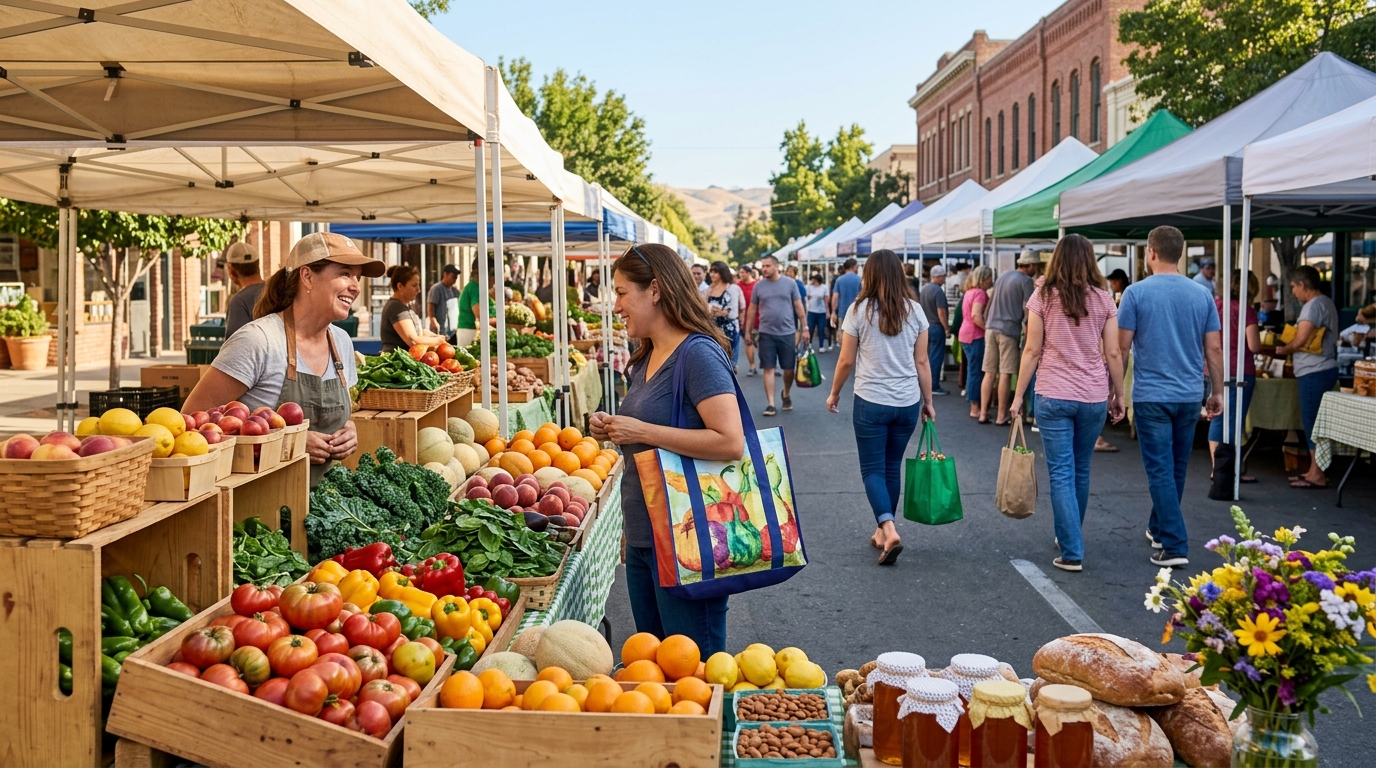
The Visalia Farmers Market main location operates year-round on Saturday mornings at 2231 West Main Street. The posted schedule is 8:00 a.m. to 11:30 a.m., rain or shine. Arriving near opening time gives you cooler temperatures, easier parking, and the widest choice, while a later visit can feel more social but may offer less selection from popular vendors. The market emphasizes local farmers, certified producers, regional artisans, and community groups, making it more useful than a conventional grocery stop for understanding what grows nearby.
Do not buy more than you can store safely. Soft fruit should stay out of direct sunlight, dairy products need a cooler, and baked goods can suffer inside a hot vehicle. Buy breakfast, a few picnic ingredients, and produce that can tolerate the next part of the drive. Keep heavy melons and jars on the trunk floor and place peaches, berries, or tomatoes in a shallow box above them.
Use Seasonal Markets for a Midweek or Evening Trip
Travelers who are not visiting on Saturday still have options. The seasonal Wednesday market at Shannon Ranch Quail Park is scheduled in 2026 from May 13 through August 26, from 8:00 a.m. to 11:30 a.m. Downtown Visalia’s Thursday night market is scheduled from September 3 through November 19, from 5:00 p.m. to 8:00 p.m. These markets can support a different itinerary: a morning market followed by an orchard drive, or an afternoon road trip ending with an evening market and dinner downtown.
Confirm the schedule before leaving because weather, holidays, or operational changes can affect market hours. Ask vendors whether they accept cards and benefit programs rather than assuming every booth uses the same payment method. When photographing a display or vendor, request permission first.
Follow the Public Orchard Corridor Toward Woodlake
After the market, head east through Visalia toward the orchard roads north and east of the city. McAuliff Road, Road 156, Avenue 328, and State Route 216 pass working agricultural areas where travelers may see citrus, walnuts, almonds, kiwis, pistachios, olives, plums, pomegranates, dairies, and feed crops. What is visible changes with the season, and orchards that are spectacular during spring bloom may appear quiet during pruning, irrigation, or post-harvest periods.
Drive From Visalia to Woodlake and Highway 198
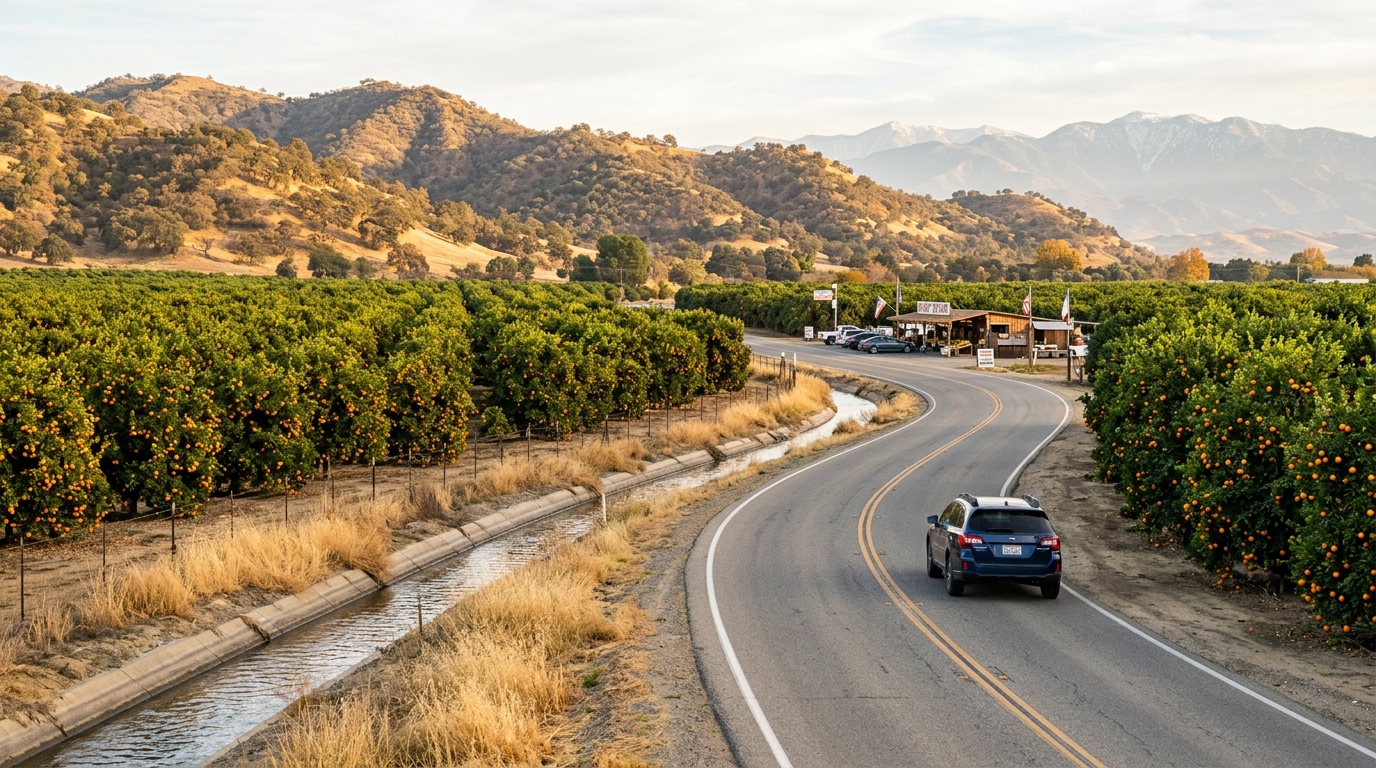
A useful route begins northeast of central Visalia, follows public roads through orchard country, and connects with State Route 216 toward Woodlake. From Woodlake, continue to Highway 198 if you are heading toward Lake Kaweah, Three Rivers, or Sequoia National Park. This route is slower than staying on the main highway, but it provides a better view of the county’s agricultural variety and the transition from flat valley farmland to Sierra foothills.
Stop only at businesses that clearly invite the public. A produce sign, marked parking area, posted hours, or open farm store is an invitation; an orchard access road is not. Never enter rows for photographs, pick fruit, block gates, or park on dry grass. Agricultural roads carry tractors, trucks, workers, and irrigation equipment, so use turn signals early and leave extra following distance.
At a farm stand, ask what was grown on the property and what came from another local producer. Look for fruit that is appropriate for when you plan to eat it. Slightly firmer stone fruit may travel better, while ripe tomatoes and peaches should be protected from heat and pressure.
If the route continues to Three Rivers, plan a picnic or early meal but follow river-safety rules. The Kaweah River can be cold, swift, and deceptive, particularly during snowmelt. Use designated public areas, pack out all trash, and keep food secured from wildlife.
Extend the Road Trip Through Tulare, Exeter and Porterville
Connect Fresh Food With the County’s Agricultural Story
The eastern orchard drive shows what grows in the landscape, while the southern extension reveals how agriculture shapes Tulare County’s towns, institutions, and identity. From Visalia, you can travel south to Tulare, east to Exeter, or continue toward Lindsay, Strathmore, and Porterville. Trying to cover all of these communities after a long morning market visit can feel rushed, so choose one corridor for a one-day trip and save the others for another day.
Choose a Tulare, Exeter or Porterville Finish
Choose Tulare when you want to focus on the county’s large-scale agricultural identity. The International Agri-Center hosts World Ag Expo, an annual event that brings agricultural technology, equipment, education, and international visitors to the city. The show takes place on specific dates rather than operating as a daily attraction, so check the calendar before planning a visit. Tulare is also a logical place to stop for a meal and consider the connection between dairies, field crops, logistics, food processing, and the equipment required to support them.
Choose Exeter for a smaller downtown stop surrounded by orchard country. Its walkable center, murals, cafes, and proximity to citrus-growing areas make it a comfortable lunch or late-afternoon break. From Exeter, roads toward Lindsay and Strathmore pass through landscapes associated with citrus production. Keep the drive on public roads and avoid treating packinghouses or working groves as attractions unless they advertise public access.
Choose Porterville for a longer southern route and a different view of the county. The city can serve as a base for food stops, community parks, and future trips toward Springville and the Highway 190 corridor. During warm weather, schedule outdoor stops earlier, carry extra water, and never leave market purchases in a closed vehicle for long periods.
Use the county’s official crop and livestock reports to understand the scale and diversity behind the scenery. Tulare County’s Agricultural Commissioner publishes annual reports covering what is produced and its economic value. Those reports add context to the dairies, citrus groves, nut orchards, feed fields, and packing operations visible from the road without turning private workplaces into sightseeing stops.
farm-to-fork
A strong farm-to-fork itinerary ends with a local meal built around the region rather than a checklist of farms. Ask restaurants which ingredients are local or seasonal, but understand that menus and supply chains change. Independent ownership, regional employment, and purchases from nearby producers all contribute to the local food economy.
Before driving home, organize produce so it survives the trip. Refrigerate dairy, meat, cut fruit, and other perishables promptly. Wash produce at home and follow instructions provided by the grower. California also maintains plant-pest and citrus-protection rules, so do not move plant material, branches, leaves, or homegrown citrus casually across quarantine boundaries.
The best Tulare County farm-to-fork road trip is built on curiosity and restraint. Shop from people who grow or make the food, drive public roads carefully, ask before photographing, respect closed gates, and let the season guide the day. By combining a certified market, an orchard corridor, one or two community stops, and a locally focused meal, visitors can experience agriculture as a living part of Tulare County rather than scenery viewed through a windshield.